
"Annual production"
8000 article(s) found

A brief introduction to the Market Price of Columbia's exquisite Fine Coffee Bean varieties
The annual temperature there is about 18 degrees Celsius, the annual rainfall is 2000 to 3000 mm, latitude 1-11 15 north, longitude 72-78 west, the specific range can exceed 2.000 meters above sea level. By a special combination of factors, the latitude, altitude, soil, plant origin of species and varieties of coffee in the coffee growing areas of Colombia, the climate and tropics of the coffee growing areas

Taste of Dominican boutique coffee beans A brief introduction to the characteristics of market development in manor producing areas
The temperate climate in Dominica is conducive to coffee cultivation, and the best places to grow coffee are the Barahona region in the southwest and the Cibao Valley north of Santiago, Dominica's second largest city. The northern region, represented by Hibao, and the southern region, including Okayabani Santo Domingo, produce good coffee. Among them, Santo

A brief introduction to the Origin, Development, History and Culture of Columbia's exquisite Coffee beans
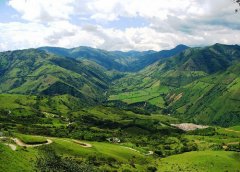
The suitable climate in Colombia provides a real natural pasture for coffee. Coffee trees in Colombia are mainly cultivated in the Andes, on steep slopes about 1300 meters above sea level, where the annual temperature is about 18 degrees Celsius, annual rainfall is 2000 to 3000 millimeters, latitude 1-11 15 north, longitude 72-78 west, and the specific range of elevation can exceed 2.000 meters. By

At the scene of the annual shareholders' meeting: what is Starbucks' plan for the Chinese market?
Today's colorful flags in Seattle and the hustle and bustle of gongs and drums held the annual shareholders' meeting of Starbucks. Shareholder representatives from the United States and around the world are jubilant, tearful and worshiped to hear how Starbucks executives, centered around chairman and CEO Howard Schultz, turn brown coffee into green dollars. The above period of wind and wind

Introduction to the varieties of Ethiopian Honey Kiss Coffee Flavor description Grinding scale treatment
Ethiopian Honey Kiss Coffee Flavor description Grinding scale treatment varieties of world-famous Ethiopian coffee are as follows: 1. Limu coffee grows between 1400 meters and 2000 meters above sea level. Wash the coffee. Excellent quality, with strong nut aromas, suitable acidity, with the intensity of wine. The annual output is 29000 tons. 2. Jima Coffee grows from 1400 meters above sea level to

A brief introduction to the origin, development, history and culture of Columbia's exquisite boutique coffee beans.
The suitable climate in Colombia provides a real natural pasture for coffee. Coffee trees in Colombia are mainly cultivated in the Andes, on steep slopes about 1300 meters above sea level, where the annual temperature is about 18 degrees Celsius, annual rainfall is 2000 to 3000 millimeters, latitude 1-11 15 north, longitude 72-78 west, and the specific range of elevation can exceed 2.000 meters. By

Jinbiao is the highest rating in Ethiopia's Rosa Village, accounting for only 5% of the annual output of the village.
Professional coffee knowledge exchange more coffee bean information Please pay attention to the coffee workshop (Wechat official account cafe_style) Rose Xia Village has a total area of 475 hectares, gradually expanding the planting area from 2011 to 2017, planting area of about 320 hectares. As the existing coffee varieties in Ruoxia Village are very large, in order to better manage and distinguish the products, the manor owner will

A brief introduction to the origin, development, history and culture of Columbia's exquisite boutique coffee beans.
The suitable climate in Colombia provides a real natural pasture for coffee. Coffee trees in Colombia are mainly cultivated in the Andes, on steep slopes about 1300 meters above sea level, where the annual temperature is about 18 degrees Celsius, annual rainfall is 2000 to 3000 millimeters, latitude 1-11 15 north, longitude 72-78 west, and the specific range of elevation can exceed 2.000 meters. By
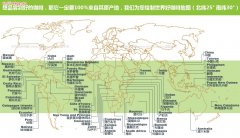
Detailed description of the flavor and taste of the world's top boutique coffee bean varieties
Latin American coffee beans (Central and South America) Brazil: Santos, Bahia, Cerrado, Mogiana Mexico: Coatepec, Huatusco, Orizaba, Maragogype, Tapanchula, Huixtla, Plumako

A brief introduction to the treatment method of grinding degree and baking degree of Columbia exquisite coffee beans with high balance
Colombia's exquisite Tamina boutique raw beans Colombia's suitable climate provides a real natural pasture for coffee. Coffee trees in Colombia are mainly cultivated in the Andes, on steep slopes about 1300 meters above sea level, where the annual temperature is about 18 degrees Celsius, annual rainfall is 2000 to 3000 mm, latitude 1-11-15 north, longitude 72-78 west, sea

The output is less than 200t, but the sales volume reaches 6000 tons. Xinglong Coffee is good after Premier Zhou Enlai Fuze.
Professional coffee knowledge exchange more coffee bean information please follow the coffee workshop (Wechat official account cafe_style)-our reporter Kuang Changxun Guo Jiaxuan special correspondent Chen Xunjing correspondent Wang Zhe Zhi Fu Ji, prosperity. In the Labour Day short holiday just past, Wan Ningxing
Costa Rican Diamond Hill Manor single Black Coffee
Costa Rican coffee cultivation was introduced by Cuba in 1779 and exported for the first time in 1820. There are about 32000 coffee farmers, with an average planting area of less than one hectare (10000 hectares) per farmer. Costa Rica has a population of 41 billion (2006), with a coffee planting area of 82500 hectares and an annual production of 1.7 million bags (60kgs per bag). The annual domestic consumption is 380000 bags.

The taste of Ethiopian coffee with the aroma of dried fruit. Ethiopian coffee products are introduced in the manor area.
Coffee is Ethiopia's most important export cash crop and the main source of Ethiopia's foreign exchange earnings. Ethiopia's coffee exports account for about 3% of the world market, making it the eighth largest coffee exporter in the world. Coffee exports increased steadily from 58000 tons in 1990 to 110000 tons in 1995-1996 and remained at this level in the following years. 2001-2002

The first Asian Coffee Conference opened in Dehongmeng City, Yunnan Province.
The first Asian Coffee Annual meeting adheres to the concept of the previous five coffee culture festivals, popularizes coffee knowledge, spreads coffee culture, guides coffee consumption, and strives to promote the development of Yunnan coffee industry. Mr. Xiong Xiangren, chairman of Dehong Hougu Coffee, said: the purpose of holding the Asian Coffee Annual meeting is to spread Chinese coffee culture, promote the growth of coffee consumption and enhance the world reputation of Chinese coffee.

Introduction to the coffee producing area of Yega Shifeiwo, Ethiopia
Following caf é comments (Wechat official account vdailycom) found that Jie Jia Xuefei, a beautiful cafe, opened a small shop of its own, a small town in Ethiopia, 1700-2100 meters above sea level, located in the northwest of Sidamo province, surrounded by mountains and lakes, one of the highest coffee-producing areas in Ethiopia and synonymous with Ethiopian boutique coffee. Strictly speaking, Yega Xuefei is a

Annual report on Nicaraguan Coffee 2017
Foreword Nicaragua's coffee production in 2016 / 2017 is estimated at a record 2.3 million bags, an increase of 7 per cent over the previous year. The rainy season is responsible for the increase in production, causing coffee trees to blossom earlier and begin to bear fruit. For 2017 / 2018 degrees, assuming good weather conditions, the forecast for the coffee sector will be very close to this year's production.

Boutique coffee beans at Diamond Hill Manor in Costa Rica
Costa Rican coffee cultivation was introduced by Cuba in 1779 and exported for the first time in 1820. There are about 32000 coffee farmers, with an average planting area of less than one hectare (10000 hectares) per farmer. Costa Rica has a population of 41 billion (2006), with a coffee planting area of 82500 hectares and an annual production of 1.7 million bags (60kgs per bag). The annual domestic consumption is 380000 bags.

Name and introduction of Ethiopian Coffee Starbucks, Ethiopian Coffee Cooperative
Yega Xuefei is a small town in Ethiopia, 1700-2100 meters above sea level. It is located in the northwest of Sidamo Province. It is one of the highest coffee producing areas in Ethiopia and is synonymous with Ethiopian boutique coffee. Strictly speaking, Yega Xuefei is a by-product area of Ethiopia's Sidamo producing area (Sidamo), which is independent because of its special flavor.

What are the flavors and differences of the coffee producing areas of Obalaka, Gongma Agua and Paraso in Honduras?
Obalaka Coffee introduction Opalaca (Montana Dorada) covers the coffee producing areas in the south of Santa Barbara province as well as Intibuca and Lempira. The name of the producing area comes from the Opalaca Mountains that span this area. Here has the unique climatic conditions, can cultivate the perfect balance of gourmet coffee. There are five protected areas in this vast area.